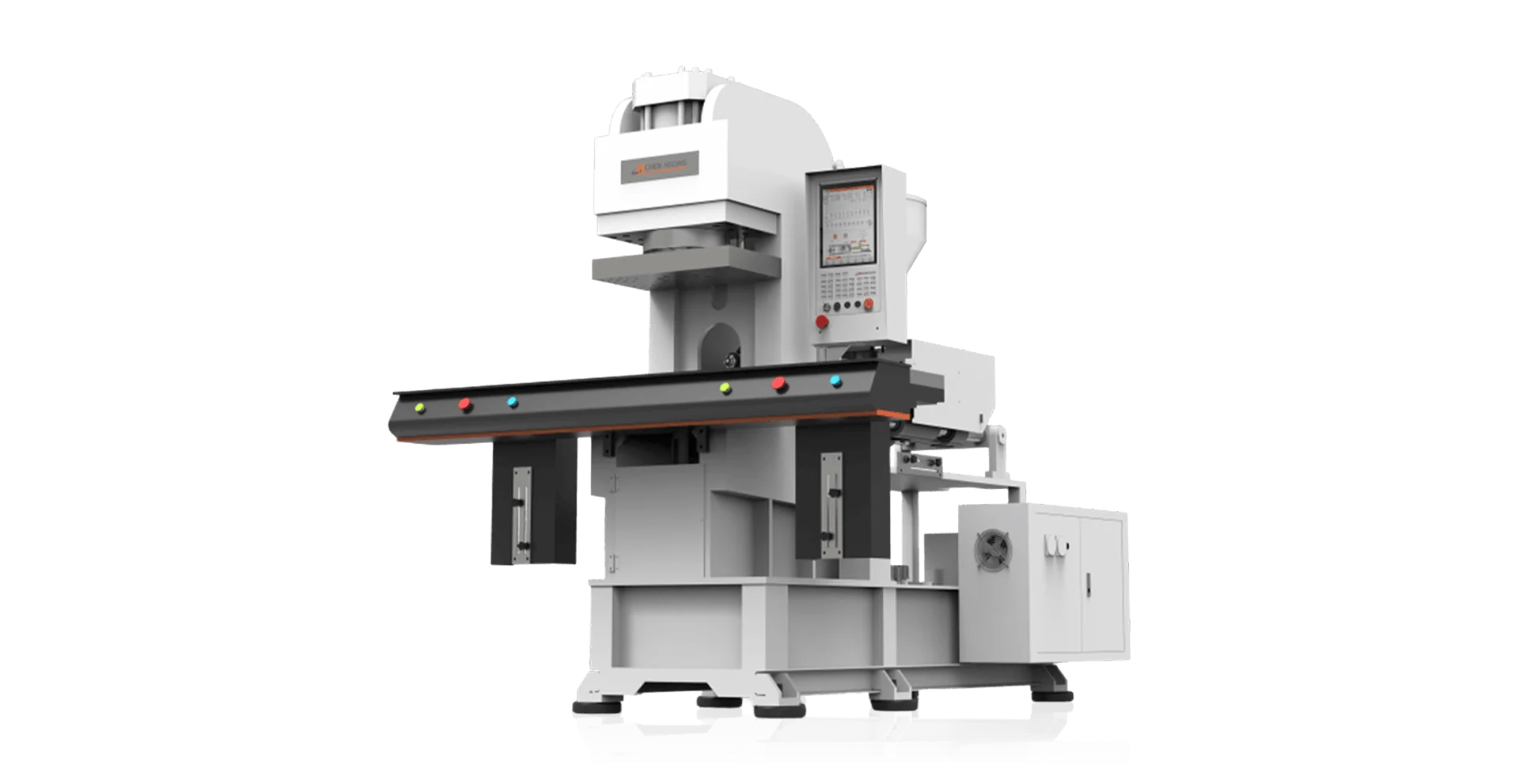
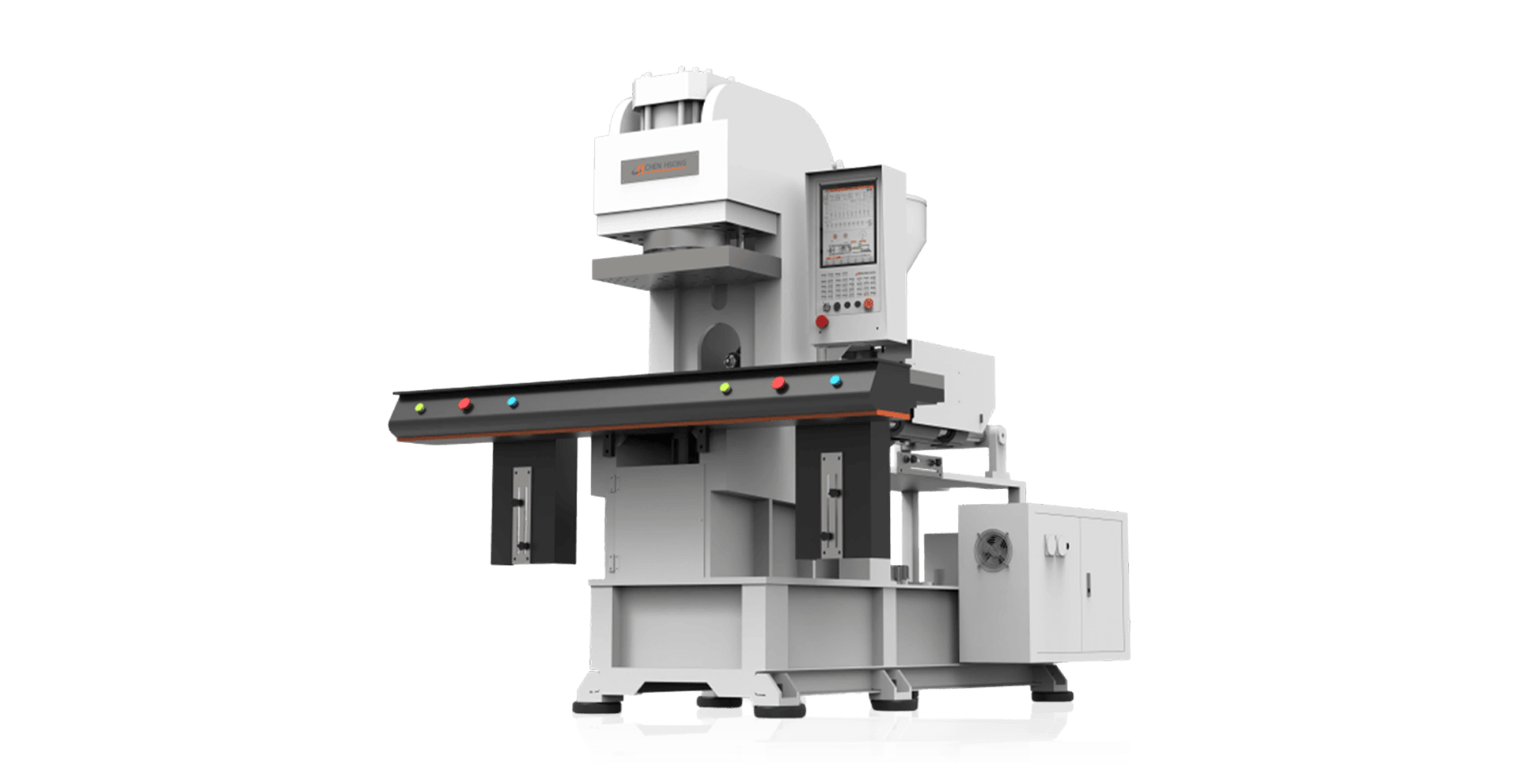
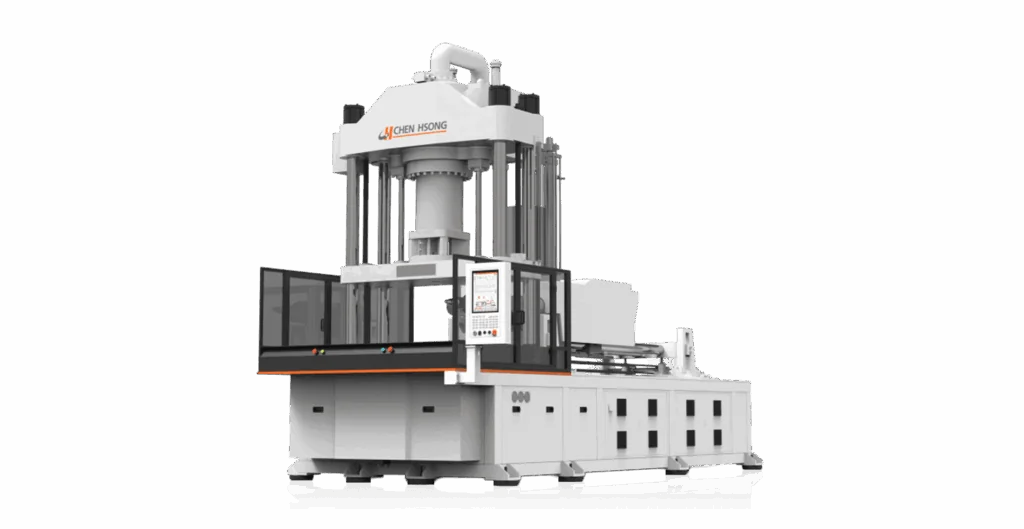
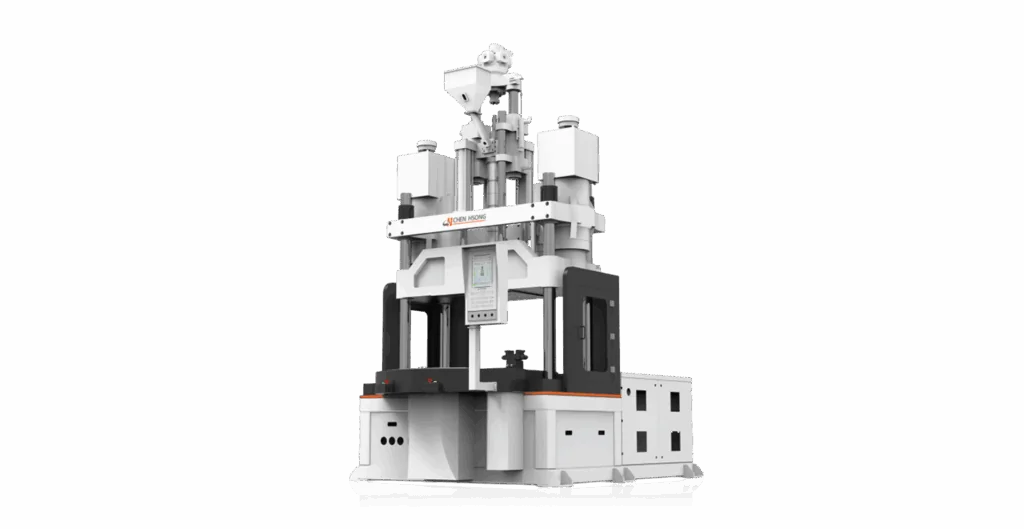
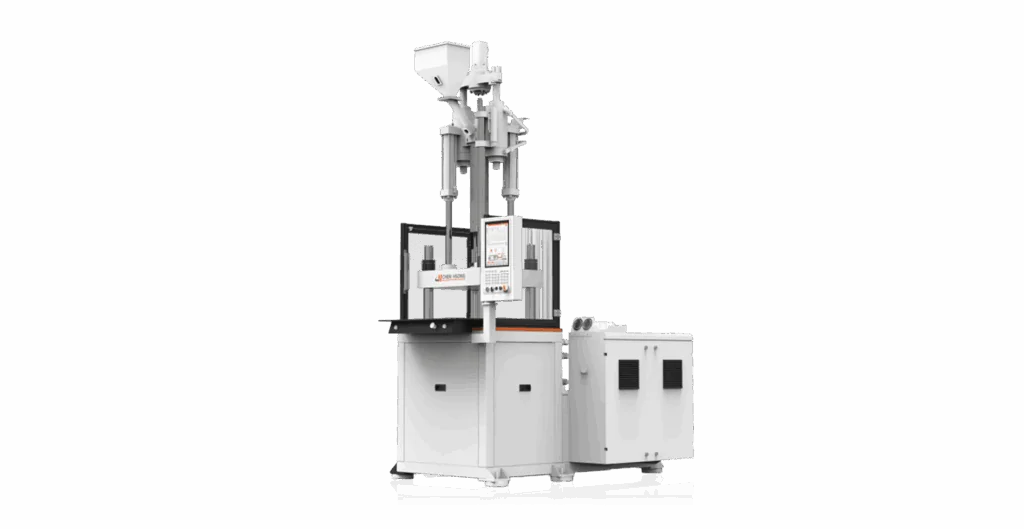
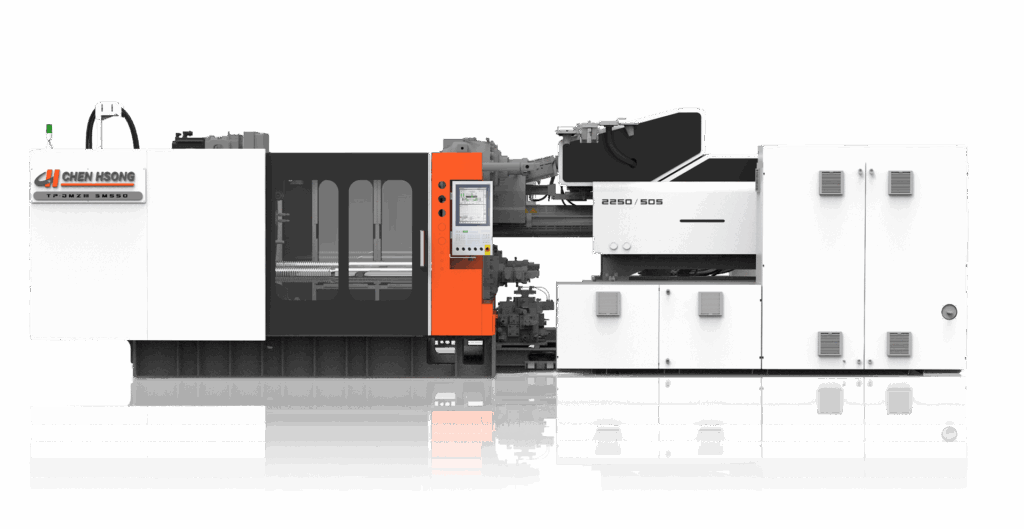
The C Series combines tieless vertical clamping with horizontal injection for maximum mold accessibility in a compact package. With no tie bars, the mold is completely unobstructed on all sides: inserts load freely, robots move without interference, and mold changes are fast. The horizontal injection unit brings the plasticising performance and shot capacity of a side-mounted screw with easy maintenance access.
The C Series is available in two clamping sizes, C55 (55 tonnes) and C85 (85 tonnes), each offered in standard, double-slide, and rotary configurations. Round rotary platens, φ880mm on the C55R and φ980mm on the C85R, support rotary and two-colour work. A hydraulic servo system is standard on the slide and rotary variants. Part of Chen Hsong’s vertical platform family, the C Series shares common components with the V, W, and H Series and can be configured for liquid silicone rubber (LSR) molding with the LSR-1000s metering unit.

Both are tieless, but they differ in injection orientation and size. The W Series uses vertical injection with tieless two-platen clamping and covers 85 to 600 tonnes on a low work height frame. The C Series uses horizontal injection with tieless vertical clamping and covers 55 to 85 tonnes in a more compact package.
Choose the C Series when you need maximum mold accessibility in a small footprint with horizontal injection; choose the W Series when you need higher tonnage, larger platens, or low work height ergonomics.
Tie bars are physical obstacles that robots must work around to reach the mold. A tieless machine gives robots clear, straight-line paths to load inserts and remove parts from any direction, which simplifies robot programming, shortens cycle time, and allows simpler end-of-arm tooling.
For automated cells where several robots or peripherals need to reach the mold, tieless clamping removes the biggest physical constraint.
The C Series suits compact, automation-friendly insert molding: small electrical connectors, precision electronic components, small automotive sensors, and any work where maximum mold accessibility in a small footprint matters most. The tieless design is especially valuable in automated cells with robotic insert loading and part removal.
Yes. The C55R and C85R rotary configurations support two-colour and multi-colour molding, with round rotary platens (φ880mm and φ980mm) providing the rotational alignment needed for material registration between stations. The C Series can also be configured for liquid silicone rubber (LSR) molding with the LSR-1000s metering and dosing unit.
EUROMAP and SPI mold standards. B&R, KEBA, and Beckhoff controller options available by region. Local service support in 85+ countries.